Food Trailers vs Permanent Premises: Cost, Flexibility & Business Growth Compared
Starting a food business is no longer limited to renting or buying a permanent storefront. Across South Africa and export markets, entrepreneurs are increasingly comparing food trailers with fixed premises to determine which model offers better flexibility, lower risk, and scalable growth.
This article provides a clear, non-sales comparison of food trailers versus permanent premises, helping buyers, startups, and investors make informed decisions before committing capital. It also reflects practical insights from suppliers such as Trailer Deals, which supports mobile food businesses for both local and international markets.
Understanding the Two Business Models -Food Trailers vs Permanent Premises
Before comparing costs or profits, it’s important to understand how these two models fundamentally differ.
-
Food trailers are mobile units that allow operators to trade at multiple locations, events, or high-traffic zones.
-
Permanent premises refer to fixed restaurants, takeaways, or cafés operating from leased or owned buildings.
Each model has advantages, but the right choice depends on business goals, risk tolerance, and growth strategy.
Startup Costs: Mobile vs Fixed Location
Food Trailer Startup Costs
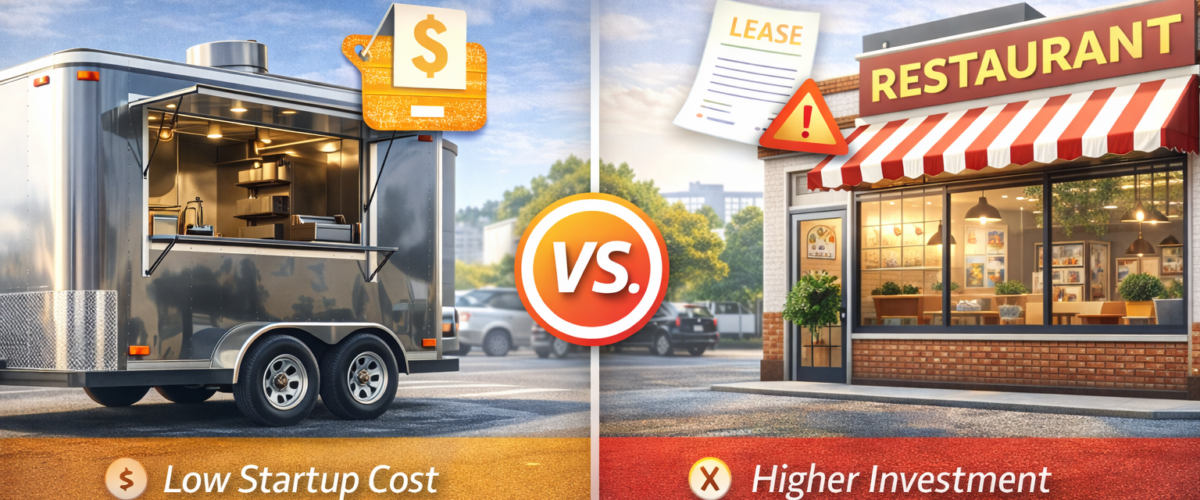
Food trailers generally require lower upfront investment, making them attractive for first-time entrepreneurs.
Typical cost components include:
-
Trailer unit and basic fit-out
-
Equipment installation
-
Licensing and permits
-
Initial branding and setup
Because there is no long-term lease or property purchase, financial exposure is significantly reduced.
Permanent Premises Startup Costs
Fixed locations often require higher initial capital due to:
-
Rental deposits or property purchase
-
Renovations and compliance upgrades
-
Utilities installation
-
Long-term contractual commitments
These costs increase the financial risk, particularly in the early stages of a food business.
Flexibility & Location Freedom
One of the most searched questions online is whether mobility provides a real advantage.
Advantages of Food Trailers
-
Ability to change locations based on demand
-
Participation in events, festivals, and markets
-
Reduced dependency on a single customer base
-
Easier testing of new areas or concepts
This flexibility allows businesses to adapt quickly to market conditions.
Limitations of Permanent Premises
-
Fixed location limits customer reach
-
Performance tied to one area’s foot traffic
-
Relocation is costly and complex
While fixed locations can build loyal local clientele, they lack adaptability.
Regulatory & Licensing Considerations
Regulations apply to both models, but the scope differs.
Food Trailer Regulations
-
Local municipality permits
-
Health and hygiene compliance
-
Event-specific approvals (where applicable)
Many mobile operators find compliance simpler due to smaller operational footprints.
Permanent Premises Regulations- Food Trailers vs Permanent Premises
-
Zoning and land-use approvals
-
Building and fire compliance
-
Long-term lease conditions
These requirements can slow down launch timelines.
Scalability & Business Growth Potential
Why Food Trailers Scale Faster
Food trailers allow:
-
Expansion through multiple units
-
Testing new locations before committing
-
Lower risk replication of a proven model
Many successful brands begin with trailers before expanding into fixed premises.
Growth Limitations of Fixed Locations
Permanent premises often require:
-
Significant reinvestment to expand
-
New leases or property purchases
-
Longer break-even periods
Growth is possible, but slower and more capital intensive.
Risk Comparison: Which Model Is Safer?
Food trailers typically carry:
-
Lower financial risk
-
Shorter break-even timelines
-
Easier exit options
Permanent premises involve:
-
Long-term contractual obligations
-
Higher sunk costs
-
Greater exposure during market downturns
For first-time operators, risk mitigation is a key deciding factor.
When a Food Trailer Makes More Sense
Food trailers are especially suitable when:
-
Starting with limited capital
-
Testing a new food concept
-
Targeting multiple locations or events
-
Planning future expansion
They are often used as a stepping stone toward permanent operations.
When a Permanent Premises Is the Better Option
Fixed locations may be ideal if:
-
A strong, consistent location is secured
-
Capital is readily available
-
Long-term brand presence is the priority
Established brands often benefit from permanent visibility.
Export & International Use Considerations
South Africa’s access to ports and export infrastructure makes it possible to source food trailers for international markets, particularly in Africa and emerging economies. Export-ready units are designed with durability, documentation, and transport compatibility in mind.