

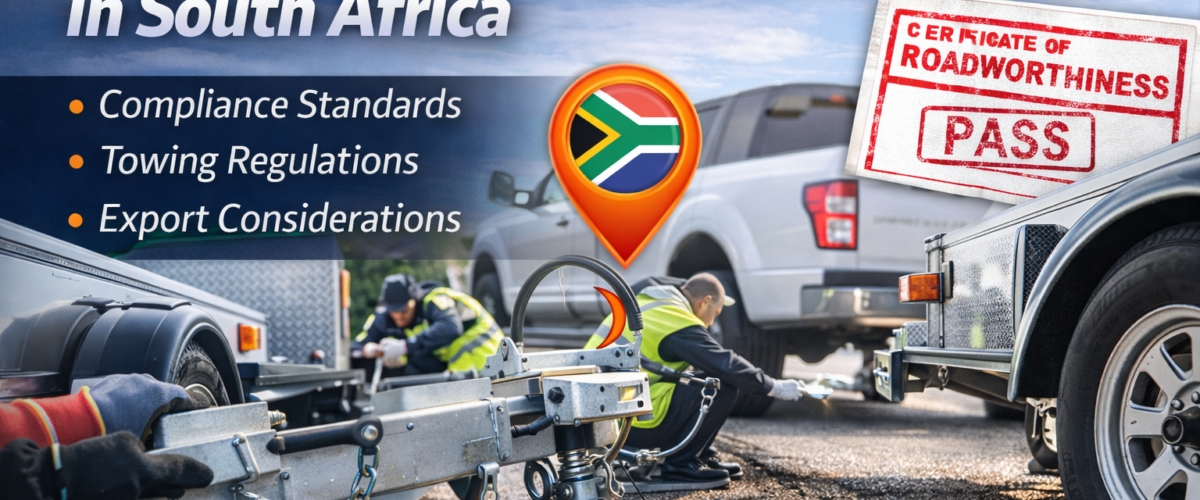
Trailer Safety, Compliance & Roadworthiness in South Africa: What Buyers Must Know Before Purchase or Export
Buying a trailer is not only a matter of size, price, or design. For both local use and export markets, safety, compliance, and roadworthiness are the most critical factors buyers must understand before making a decision. Many issues faced by trailer owners—fines, failed inspections, border delays, or even accidents—can be traced back to non-compliant or poorly specified trailers.
This article provides a clear, industry-based explanation of trailer safety and compliance in South Africa, helping buyers make informed, low-risk decisions when sourcing from professional suppliers such as Trailer Deals, which supplies trailers for both domestic and international markets.
What Does “Roadworthy” Mean for Trailers in South Africa?
In South Africa, a roadworthy trailer is one that meets legal safety and mechanical standards required for public road use. These standards apply whether the trailer is used for business, personal transport, or export preparation.
A roadworthy trailer must generally meet the following conditions:
-
Structurally sound chassis with no cracks or corrosion
-
Properly functioning lights, reflectors, and indicators
-
Secure coupling and safety chain
-
Axles and suspension rated for the declared load
-
Braking system compliant with weight regulations (where applicable)
Roadworthiness requirements are enforced under guidelines administered by authorities such as the Road Traffic Management Corporation, making compliance essential for legal and safe operation.
Trailer Braking Systems: What Buyers Often Overlook
One of the most common compliance issues relates to braking systems. Not all trailers are legally required to have brakes, but this depends on gross vehicle mass (GVM) and intended use.
Key buyer considerations include:
-
Trailer weight when fully loaded, not empty
-
Compatibility between trailer brakes and towing vehicle
-
Maintenance access and reliability under load
-
Legal thresholds that trigger brake requirements
For export buyers, braking standards may differ in the destination country, which is why sourcing from suppliers familiar with export specifications is critical.
Axles, Suspension & Load Ratings Explained Simply
Axles and suspension systems determine how safely a trailer carries weight over distance and uneven terrain. Inadequate axle ratings are a major cause of structural failure and unsafe towing.
Buyers should always verify:
-
Axle rating exceeds maximum expected load
-
Suspension type matches usage (urban vs rough terrain)
-
Load distribution is balanced across axles
-
Wheels and tyres are rated for trailer GVM
Compliance with compulsory technical specifications is overseen by bodies such as the National Regulator for Compulsory Specifications, which plays a central role in manufacturing oversight.
Towing Regulations & Vehicle Compatibility
A compliant trailer can still be unsafe if it is not correctly matched with the towing vehicle. Towing regulations focus on stability, braking balance, and control.
Critical towing checks include:
-
Vehicle towing capacity vs trailer GVM
-
Correct tow bar rating and installation
-
Functional safety chains and couplings
-
Proper electrical connections for lighting
Automotive safety guidance from organizations such as AA South Africa highlights the importance of vehicle–trailer compatibility in preventing accidents.
Compliance Differences: Local Use vs Export Markets
Trailers intended for export often require additional preparation beyond local road use. Export compliance is not only about safety—it also affects customs clearance and acceptance in the destination market.
Export-ready trailers typically require:
-
Clear technical specifications and weight declarations
-
Robust construction suitable for varied road conditions
-
Documentation aligned with customs requirements
-
Packaging or crating for international transport
Customs and export procedures are managed through institutions such as the South African Revenue Service, making accurate documentation a critical part of the export process.
Common Compliance Mistakes Buyers Make
Even experienced buyers sometimes overlook key safety and legal factors. The most frequent mistakes include:
-
Buying based on price without checking axle ratings
-
Assuming all trailers are export-ready
-
Ignoring braking requirements until inspection
-
Using mismatched towing vehicles
-
Failing to request technical documentation
These mistakes often result in delays, extra costs, or forced modifications after purchase.
How Professional Suppliers Reduce Compliance Risk
Experienced suppliers integrate compliance into the design and supply process rather than treating it as an afterthought. This includes:
-
Clear disclosure of load ratings and specifications
-
Design aligned with road and export requirements
-
Familiarity with cross-border and overseas shipping
-
Guidance on safe towing and usage
This approach helps buyers avoid costly corrections later and ensures smoother operation both locally and internationally.
Buyer Compliance Checklist (Quick Reference)
Before purchasing any trailer, buyers should confirm:
-
Chassis strength and material quality
-
Axle, suspension, and braking suitability
-
Lighting, coupling, and safety systems
-
Vehicle compatibility for towing
-
Export documentation readiness (if applicable)
This checklist alone can prevent most compliance-related issues.
Final Thoughts: Safety and Compliance First
Trailer safety and compliance are not optional—they are foundational to performance, legality, and long-term value. Whether a trailer is used locally or exported abroad, understanding roadworthiness and regulatory requirements protects both the buyer and the business investment.
South Africa remains a trusted sourcing destination because of its strong engineering base and export experience. Suppliers like Trailer Deals demonstrate how professional, compliance-focused operations support buyers with safe, road-ready, and export-capable trailers.
👉 Learn more: https://trailerdeals.co.za/
South African trailer safety standards